For an enterprise product, time to value makes a great north star for deployment. Here are a few thoughts on making it useful.
The most important thing to realize is that every deployment starts underwater. The client has just signed, so expectations are high. They’ve started paying, and they still have to change how they work before they see any value.
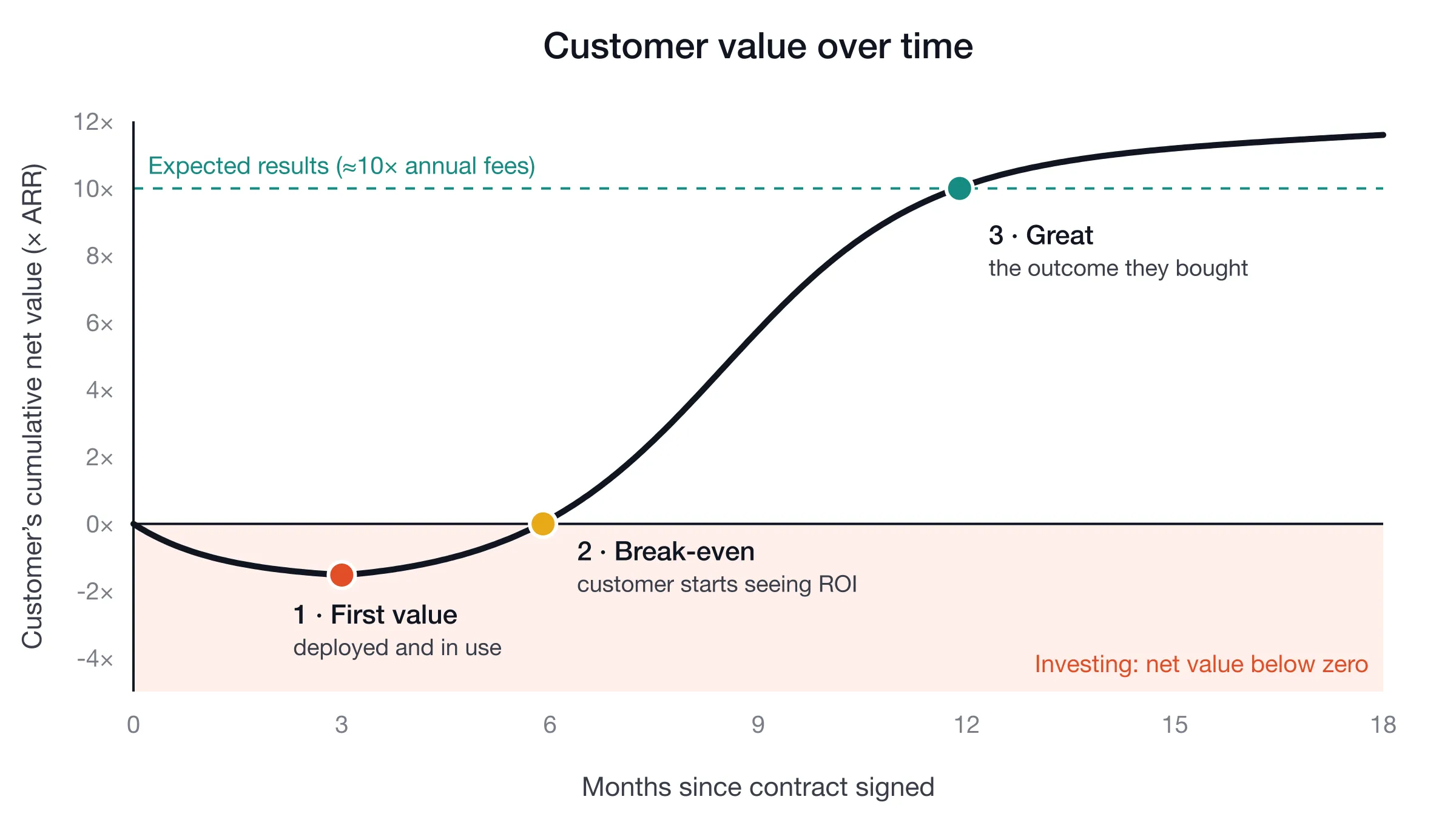
So if you measure cumulative value over time, you start in the negative. Your goal is to reach full ROI (usually about 10× what they’ve spent) by renewal. The chart below shows that curve and three key milestones:
- First value. They’re deployed and using the product. Cumulative value stops falling and starts to climb.
- Break-even. Value matches everything they’ve invested. This is exciting for a CS team but only “meh” for the customer. It’s where ROI starts to accrue.
- Great. Accumulated value reaches roughly 10× ARR, a common rule of thumb for what justifies switching to a new platform.
Many definitions of time to value stop at first value, measured from contract signature. That’s useful, but only a start. Define what each milestone looks like for your customers, and aim to get every one of them to great.